Researchers Examine Cadmium Phytoextraction Abilities of Various Plants
Chinese Academy of Sciences study compares five hyperaccumulators in soils with different pH levels
Introduction
Phytoremediation, a cost-effective and eco-friendly method for remediating heavy metal-contaminated soils, has become an increasingly important research topic worldwide. In an effort to identify more hyperaccumulators and understand their adaptive mechanisms to different soil types, researchers from the South China Botanical Garden of the Chinese Academy of Sciences have recently conducted a study comparing the cadmium (Cd) phytoextraction abilities of five hyperaccumulator plants in two soils with varying pH values.
Methodology and Results
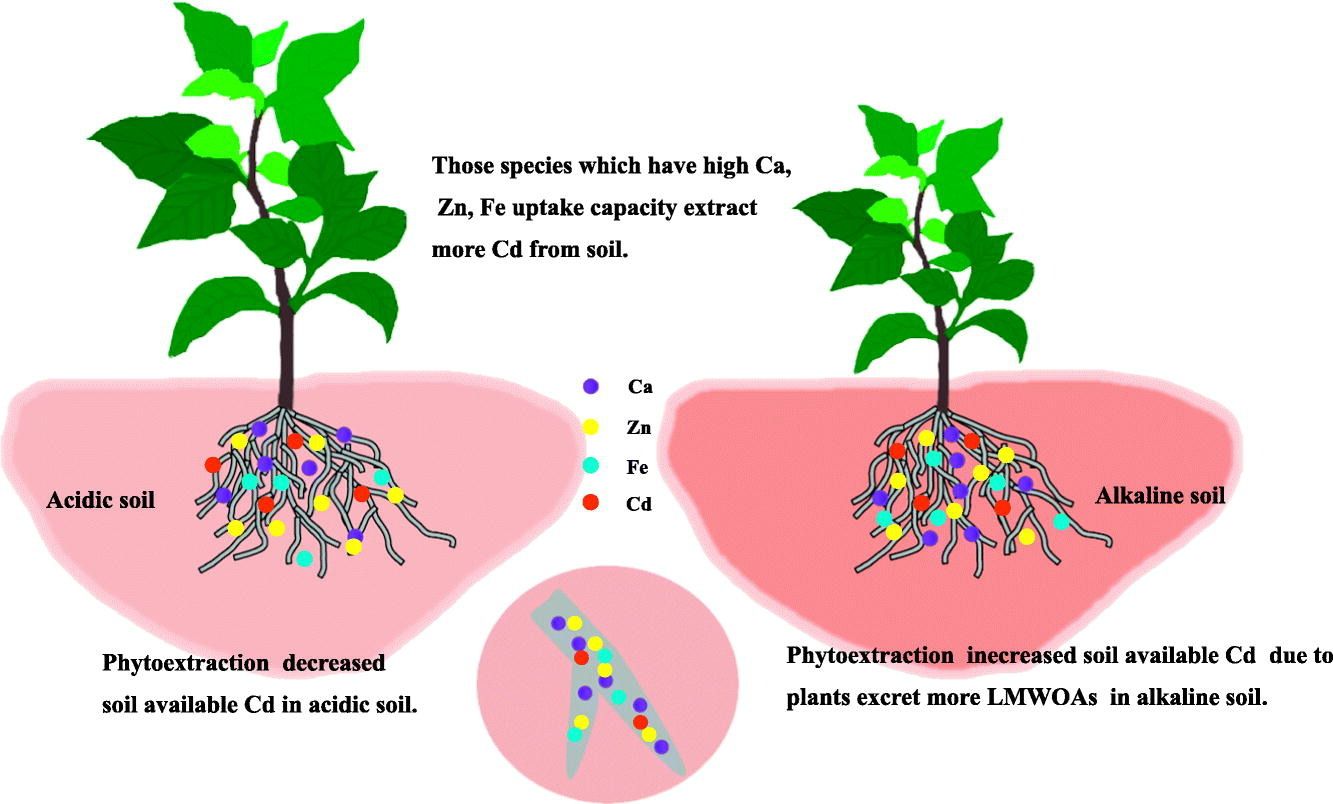
Under the guidance of Prof. LI Zhian, doctoral student HUANG Rong compared the Cd phytoextraction abilities of Amaranthus hypochondriacus, Celosia argentea, Solanum nigrum, Phytolacca acinosa, and Sedum plumbizincicola in acidic and alkaline soils. The study found that most accumulator plants grew better in acidic soil, with 19.59–39.63% higher biomass than in alkaline soil, except for S. plumbizincicola.
In the acidic soil, C. argentea and A. hypochondriacus extracted the highest amount of Cd. In the alkaline soil, S. plumbizincicola performed best due to its high Cd accumulation in plant tissue. Most plants achieved a leaf Cd bioconcentration factor (BCF) of more than 10 in the acidic soil, while the BCF was less than 4 in the alkaline soil. In the acidic soil, the plants slightly decreased soil available Cd.
The study also discovered that plant species with high calcium (Ca), zinc (Zn), and iron (Fe) uptake capacity extracted more Cd from the soil, and a positive correlation was found between the concentrations of Cd and Ca, Zn, and Fe in leaves.
Conclusion
This research indicates that acidic soil has greater potential for recovery from Cd contamination through phytoextraction. In alkaline soil, S. plumbizincicola demonstrated potential for Cd phytoextraction. The findings of this study, published in the Science of the Total Environment journal, contribute valuable insights to the ongoing efforts in identifying hyperaccumulators and optimizing phytoremediation techniques for heavy metal-contaminated soils.